Sumo Wrestler Training: What the Science Shows
What research on sumo wrestlers body composition reveals about fat distribution, functional strength training, and metabolic health.
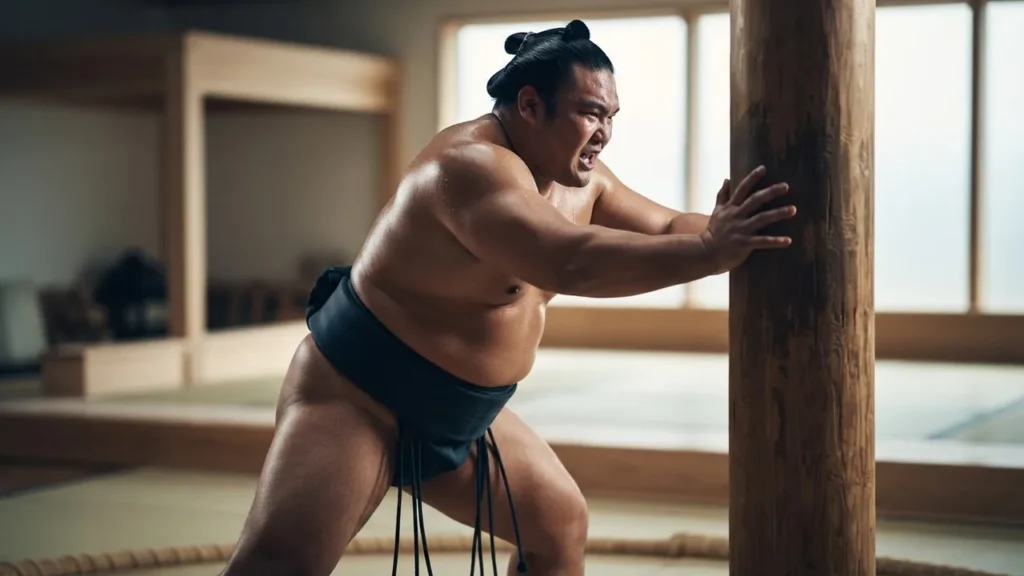
Sumo wrestler training is built on a handful of bodyweight basics, shiko leg stamps, teppo pole strikes and suriashi sliding steps, plus long sessions of live bouts, usually done in the morning before the first meal. It builds extraordinary amounts of muscle and other lean mass. The health story is more mixed than the internet version: active wrestlers appear to carry less dangerous belly fat than their size suggests, yet as a group they have had more gout, diabetes and high blood pressure than other men their age, and they die years earlier.
Here is what sumo training actually involves, what the research on wrestlers’ bodies shows, and the parts that are genuinely worth borrowing.
What Does Sumo Wrestler Training Actually Involve?
Practice, called keiko, happens in the morning, traditionally on an empty stomach. A 2024 study of junior wrestlers describes sessions of about 2.5 to 3 hours, five to six days a week.
That practice is hard but not a nonstop sprint. When researchers fitted junior wrestlers with heart-rate monitors, the average during training was 121 beats per minute, with peaks around 157 and lows around 81. That pattern points to intermittent effort: hard bursts with recovery in between.
The daily pattern matters as much as the session. Professional wrestlers traditionally train without breakfast, then eat two large meals, lunch and dinner, totaling roughly 5,000 calories, and often nap after lunch. A classic 1976 study put that in context: the average Japanese diet at the time was about 2,279 calories spread over three meals.
The Japan Sumo Association traces sumo to Shinto harvest rituals some 1,500 years ago, and today’s professional system grew out of groups formed in the Edo period. Two details surprise most people. There are no weight classes, so a wrestler can face an opponent twice his weight. And you don’t start huge: the association’s minimum for new recruits is 167 cm (about 5 ft 6 in) and 67 kg (about 148 lb).
The Core Sumo Exercises: Shiko, Teppo and Suriashi
The Japan Sumo Association names shiko, teppo and suriashi as the representative basics of keiko. It says they are designed to drop the center of gravity to the lower abdomen and keep the spine strong and stable. Orthopedic surgeons who treat professional wrestlers describe them simply: repeated leg lifts, strikes against a wooden pole, and sliding feet.
- Shiko. From a wide stance, toes turned out and knees bent to about a right angle, shift your weight to one side, lift the other leg high by straightening the knee, then bring it down toes first and stamp. The association’s instructions stress keeping the chest up, not leaning forward, and never pulling the leg up with your hand.
- Teppo. Repeated hand strikes against a wooden pole.
- Suriashi. Sliding the feet along the ground while holding a low, steady posture.
- Matawari. A wide-legged seated split: spread the legs, lower the hips until you sit, then lean forward. It is sumo’s classic hip-flexibility drill.
| Exercise | What it is | Evidence |
|---|---|---|
| Shiko | High leg lift, then stamp | Tradition only, no trials found |
| Teppo | Hand strikes on a wooden pole | Tradition only, no trials found |
| Suriashi | Sliding steps in a low stance | Tradition only, no trials found |
| Matawari | Wide seated split | Tradition only, no trials found |
| Wide-stance squat | Gym cousin of the shiko stance | One small lab study (more inner-thigh work) |
That last column is the honest part. We found no controlled trials testing shiko, teppo or suriashi themselves. The association has even built a 12-movement “sumo health exercise” routine for children through older adults and says it improves leg strength, balance and more, but those are claims, not trial results. The nearest gym evidence is for the wide stance: in a study of 10 competitive bodybuilders, a wide, sumo-style back squat produced more activity in the outer quadriceps and the inner-thigh adductors on the way up than the other squat variations tested.
Do Sumo Wrestlers Lift Weights?
Traditional keiko doesn’t revolve around weights. It is built on the basics above plus bout after bout with stablemates, and the published research on wrestlers describes their training in those terms. We could not find a study measuring how many professionals also use a weight room, so treat any confident number you see online with caution.
What lab testing does show is that sumo builds a very specific kind of body:
- Enormous fat-free mass. A study of 37 professional wrestlers found they carried more fat-free mass than highly trained bodybuilders. Six had more than 100 kg (220 lb) of it, and the largest had 121.3 kg (267 lb). The authors suggested the elite wrestlers are close to the upper limit for how much lean mass a human frame can carry.
- Less strength per pound. When 23 professionals were compared with heavyweight judo athletes, wrestlers and weightlifters, the sumo wrestlers had more body fat, smaller arm and thigh muscle cross-sections, and lower strength relative to body mass.
In other words, sumo practice is superb at building sheer mass, not maximal strength per pound. If maximal strength is your goal, a structured lifting plan is the more direct tool, as we explain in progressive overload.
What the Research Actually Found About Sumo Wrestlers’ Fat
The famous claim is that sumo wrestlers are big but metabolically healthy because their fat sits under the skin, not around the organs. There is real research behind the first half of that.
In the early 1990s, Japanese researchers using CT scans split obesity into two types: fat stored under the skin and fat stored deep in the abdomen, around the organs. Metabolic and circulation problems were far more common with the deep, visceral type. A 1996 review on insulin resistance then noted that active sumo wrestlers, despite massive fat under the skin, tend to have low visceral fat, no high blood sugar and no abnormal blood fats, and it credited their exercise. Our guide to visceral fat covers why fat location matters more than total body weight.
The rest of the evidence is less flattering:
- Professional wrestlers in 1976. In 96 wrestlers averaging 100.4 kg (221 lb), diabetes (5.2%), gout (6.3%) and high blood pressure (8.3%) were all considerably more common than in 89 healthy men of the same age, and triglycerides and uric acid were higher. The authors blamed the high-calorie diet first and the two-meal pattern second.
- Junior wrestlers today. In a small 2021 study, 14 junior wrestlers aged 9 to 17 had normal or low blood sugar and normal HbA1c, but higher systolic blood pressure and lower “good” HDL cholesterol than children with obesity who played other sports.
So the protective picture has some support for visceral fat and blood sugar in young, active wrestlers. Even then, blood pressure, blood fats and uric acid tell a less rosy story, and it does not mean sumo-level size is healthy.
Why This Happens
The most likely explanation is the training itself. Visceral fat responds well to exercise and calorie control; the same Japanese research group that described visceral obesity reported it to be “rather sensitive” to both. Wrestlers who practice for hours most days are, in effect, running a large daily exercise program alongside their surplus.
A 2024 study of junior wrestlers adds a useful detail. Using the gold-standard doubly labeled water method, researchers measured an average energy expenditure of 4,194 calories a day. Over six months, the boys gained about 2 kg (4.4 lb), and that gain was almost entirely fat-free mass, while fat mass did not change significantly. Outside practice, though, they spent about 8.6 hours a day sitting or lying down, plus about 8.3 hours asleep. The lifestyle is hard training followed by deliberate rest.
A caveat on all of this: the best-known visceral fat findings come from older studies and reviews, and most research uses small groups. The “training protects them” idea is plausible and fits what we know about visceral fat, but it has not been tested the way a drug would be.
The Honest Caveat: Do Sumo Wrestlers Stay Healthy?
Over a lifetime, mostly not. The long-term data are consistent:
- Shorter lives. A 2025 analysis of more than 95,000 former athletes across 44 sports found sumo wrestling had the most negative association with lifespan among men, about 9.8 years shorter than their reference populations. This is observational data, so it shows a link, not a single cause.
- Body mass predicts risk. In a case-control study of wrestlers who reached the top division between 1926 and 1989, each extra point of BMI raised the odds of death by about 8%. The authors could not account for smoking, alcohol or cause of death.
- Joints pay early. X-rays of first-year wrestlers showed clear arthritis-type knee changes in 12.5% of high school entrants and 20.3% of college freshmen, with heavier wrestlers at higher risk. Knee ligament injuries are common too: after ACL reconstruction, 20% of professional wrestlers in one hospital’s series injured the same or the other knee again.
What about retirement? A common claim, including in an earlier version of this article, is that wrestlers’ fat shifts toward the dangerous visceral pattern once they stop training. Researchers studying junior wrestlers do describe the sumo lifestyle and its high-energy diet as predisposing wrestlers to metabolic syndrome after retirement, and it fits everything above. But we could not find a study that actually tracked visceral fat in the same wrestlers before and after they retired, so treat that specific claim as unproven.
What You Can Actually Apply
- Fat location matters, and your scale can’t see it. Two people with the same weight can carry very different amounts of visceral fat. A tape measure helps: our BMI calculator also gives your waist-to-height ratio, and our guide to waist-to-height ratio explains why it often beats BMI alone.
- Consistency is the protective part. Whatever benefit wrestlers get seems tied to training most days. Treat that as a warning against assuming a good body composition, once achieved, is permanent without continued training.
- Copy the training, not the eating. The 5,000-calorie, two-meal pattern exists to build size. It is also the part researchers blamed for wrestlers’ high blood fats and uric acid.
- Functional strength over simplistic metrics. This fits a pattern seen across traditional training cultures on this site, from Roman legionaries to Soviet kettlebell training: strength that transfers to real movement beats a single number.
A Sumo-Inspired Workout You Can Do at Home
This is a tradition-inspired routine, not a tested program. It borrows the stance and footwork, with the intensity scaled for normal bodies.
- Shiko-style leg lifts, 2 sets of 5 per side. Wide stance, toes turned out, hips low. Shift your weight, lift one leg only as high as you can control, and set it down softly. Skip the stamp at first; hold a chair if your balance is shaky.
- Wide-stance squats, 2 to 3 sets of 8 to 12. The gym version of the shiko stance, and the one with lab data on inner-thigh work. Keep knees tracking over toes.
- Suriashi slides, 3 lengths of a room. Stay low, keep your back straight, and slide your feet along the floor without bobbing up.
- Wall pushes, 3 sets of 10. A teppo stand-in: drive your palms into a wall from a staggered stance, pushing from the legs and hips.
- Gentle wide-leg stretch, 60 seconds. A matawari-inspired seated straddle, only as far as is comfortable.
If you have knee or hip arthritis, a past ACL injury or balance problems, start with the squats and slides, keep the range small, and check with a physical therapist before adding deep stances or stamping. For a broader balance routine, see balance exercises for fall prevention after 60.
Sumo is one of several Japanese traditions we have looked at. Our breakdown of samurai training and bushido separates warrior myth from history, and Japanese longevity exercises covers gentler daily moves.
This article is for general education and is not medical advice. See our medical disclaimer.
Sources
- Japan Sumo Association (Nihon Sumo Kyokai). Official pages: Sumo kenko taiso [sumo health exercises] (sumo.or.jp); Sumo kihon dosa [basic movements], 2012 (PDF); Sumo introduction (PDF); How to become a rikishi (sumo.or.jp).
- Shimizu S, et al. Second anterior cruciate ligament injuries after anterior cruciate ligament reconstruction in professional sumo wrestlers: a case series. Orthop J Sports Med. 2020;8(2):2325967120903698. PubMed 32128318
- Ogawa M, et al. Evaluation of energy balance estimated from total energy expenditure and body composition changes in junior sumo wrestlers: an observational study over six months. Cureus. 2024;16(5):e61158. PubMed 38933620
- Nishizawa T, et al. Some factors related to obesity in the Japanese sumo wrestler. Am J Clin Nutr. 1976;29(10):1167-1174. PubMed 973605
- Kondo M, et al. Upper limit of fat-free mass in humans: a study on Japanese sumo wrestlers. Am J Hum Biol. 1994;6(5):613-618. PubMed 28548340
- Kanehisa H, et al. Body composition and isokinetic strength of professional sumo wrestlers. Eur J Appl Physiol Occup Physiol. 1998;77(4):352-359. PubMed 9562364
- Coratella G, et al. The activation of gluteal, thigh, and lower back muscles in different squat variations performed by competitive bodybuilders: implications for resistance training. Int J Environ Res Public Health. 2021;18(2):772. PubMed 33477561
- Tarui S, et al. Visceral fat obesity: anthropological and pathophysiological aspects. Int J Obes. 1991;15(Suppl 2):1-8. PubMed 1794929
- Karam JH. Reversible insulin resistance in non-insulin-dependent diabetes mellitus. Horm Metab Res. 1996;28(9):440-444. PubMed 8911980
- Khatun S, et al. Glycated hemoglobin (HbA1c) is independently associated with the bioelectrical impedance phase angle in junior sumo wrestlers: a pilot study. Physiol Rep. 2024;12(9):e16045. PubMed 38740565
- Ogawa M, et al. Comparative evaluation of obesity-related parameters in junior sumo wrestlers and children with obesity. Phys Act Nutr. 2021;25(3):36-43. PubMed 34727687
- Altulea A, et al. Sport and longevity: an observational study of international athletes. GeroScience. 2025;47(2):1397-1409. PubMed 39129051
- Kanda H, et al. Higher body mass index is a predictor of death among professional sumo wrestlers. J Sports Sci Med. 2009;8(4):711-712. PubMed 24137100
- Nakagawa Y, et al. Radiological osteoarthritic knee joint changes in high school and collegiate sumo wrestlers: the observational study. Medicine (Baltimore). 2022;101(37):e30642. PubMed 36123914
Want more science-backed breakdowns like this one? Subscribe to The Wonder Drop on YouTube for new videos every week.
This article is for informational purposes only and is not medical advice. See our Medical Disclaimer before changing your exercise, diet, or supplement routine.
See every method in action
New research-backed workouts on YouTube every week — no gym required.
Frequently asked questions
Do sumo wrestlers lift weights?
Traditional sumo practice is built on bodyweight basics such as shiko, teppo and suriashi plus repeated bouts with training partners, not barbell programs. We found no study measuring how many professionals also lift. Lab tests show sumo builds huge fat-free mass but less strength per pound than heavyweight judo athletes, wrestlers and weightlifters.
What exercises do sumo wrestlers do?
The Japan Sumo Association names shiko (high leg lifts and stamps), teppo (hand strikes against a wooden pole) and suriashi (sliding footwork in a low stance) as the representative basics, alongside matawari, a wide-legged seated split. In a study of junior wrestlers, practice lasted about 2.5 to 3 hours, five to six days a week.
Are sumo wrestlers metabolically healthy?
Partly, while they are active. A 1996 review noted that active wrestlers tend to have low visceral fat and normal blood sugar despite heavy fat under the skin. But other studies found higher rates of gout, diabetes and high blood pressure than in other men their age, along with higher blood fats and uric acid.
How long do sumo wrestlers live?
Shorter than average. A 2025 analysis of more than 95,000 former athletes found sumo wrestling had the most negative association with lifespan among male sports, about 9.8 years shorter than reference populations, and a higher BMI predicted earlier death among top-division wrestlers.
What happens to sumo wrestlers after they retire?
Their metabolic health is widely assumed to worsen when training stops but eating habits remain, and researchers describe the sumo diet as predisposing wrestlers to metabolic syndrome after retirement. However, we could not find a study that tracked visceral fat in the same wrestlers before and after retirement, so that claim is unproven.
Is shiko a good exercise for non-wrestlers?
It may be a useful hip, leg and balance drill, but it has not been tested in controlled trials, so treat it as tradition. Start with small, controlled leg lifts without the stamp, hold a support if needed, and check with a physical therapist if you have knee or hip problems.
What do sumo wrestlers eat?
Professionals traditionally skip breakfast, train in the morning, then eat two large meals, lunch and dinner, totaling around 5,000 calories, often followed by a nap. A 1976 study blamed this high-calorie, two-meal pattern for wrestlers’ high blood fats and uric acid.


